Self-dumping hoppers aren’t treated gently; they get banged and scraped during use, and they’re often outdoors or in harsh indoor environments. No matter how well-built and maintained, this use and abuse inevitably takes a toll.
Damage and deterioration in self-dumping hoppers can range from cracked welds to misaligned, seized, broken, or missing components. These faults can quickly become safety hazards, so any damage to a self-dumping hopper should be addressed promptly.
In most cases, issues with self-dumping hoppers can be resolved through simple repairs or component replacements. However, at some point, a replacement may make more sense.
Repair: Loose or Missing Hardware
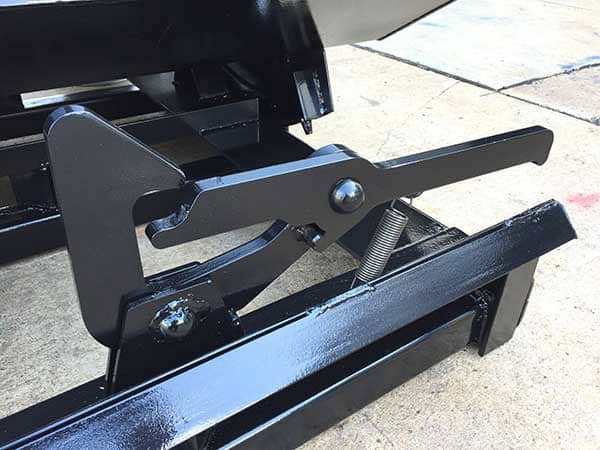
Missing parts, especially those related to the latch and holding the hopper upright, are a serious problem. Fortunately, the fix is straightforward: purchase and install replacements. OEM parts are always recommended to ensure fit and function.
If you find loose parts during a routine inspection, attach and securely tighten them to prevent latch problems and other safety issues with your hopper.
Repair: Cosmetic Issues
Cosmetic damage, such as scraped paint or a cracked lid, should be repaired quickly. It’s rarely a reason to replace a unit, but if neglected, it could lead to bigger problems, such as corrosion or water ingress.
Replace: Significant Structural Issues
Heavy use and rough treatment can lead to problems such as bent frames or misalignments, both of which make it difficult for a forklift operation.
If damage or other issues with the frame cause the hopper and pivot to become misaligned, the hopper may not tip or return correctly, and it may not align with the safety latch.
Because these structural issues can be expensive to repair, replacement is usually the best strategy.
Replace: The Body Is Corroding
Once corrosion has developed, it’s almost impossible to stop. For a self-dumping hopper, this will lead to holes that allow debris to escape and a seriously weakened structure that could fail without warning. Always replace a corroded hopper.
Replace: Outdated Model With No Replacement Parts
Latch-and-release components must work properly to avoid accidents, and this typically requires periodic replacement of parts like springs and washers. However, over time, some manufacturers may discontinue support for older models or even leave the hopper business entirely.
If replacement parts are not available for your self-dumping hopper, it’s definitely time for a replacement.
Replace: Hopper Doesn’t Meet Safety Standards, Even After Repairs
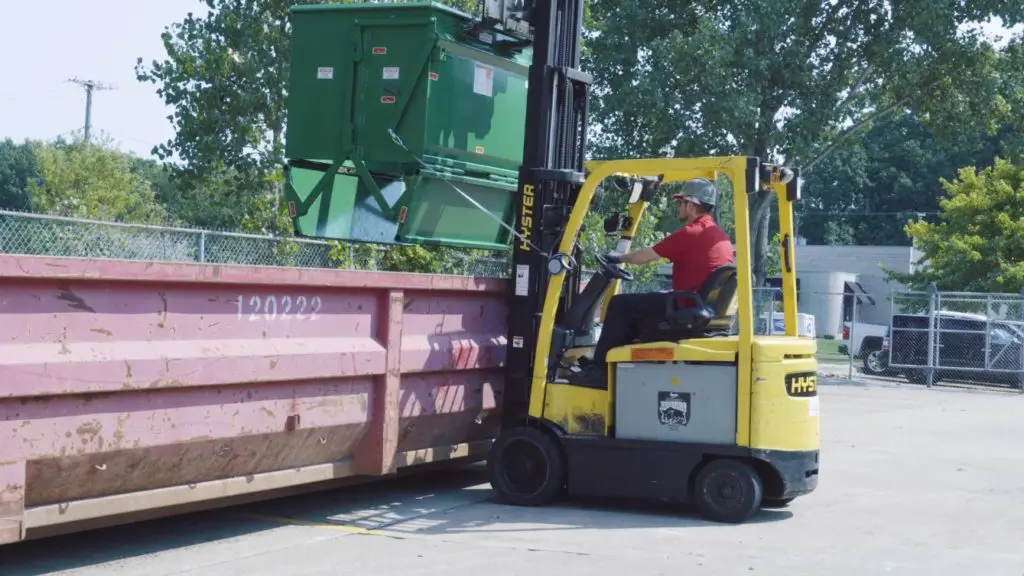
Safety must always be the top priority when using any industrial equipment, and that includes self-dumping hoppers. If a fault or problem develops that can’t be fixed in a way that ensures the unit is completely safe, it must be replaced.
General Tip: Use the 50% Rule
Repairs can become costly, especially if extensive work is required or major parts must be replaced. When the estimated repair cost starts to add up, it’s worth exploring whether a replacement would make more sense.
This is where the 50% rule comes in. Generally speaking, it’s best to replace if repair costs exceed 50% of the cost of a replacement unit. There are some qualifications to this rule, including how long the repaired unit will last, indirect expenses related to non-availability, and the lead time on a replacement. However, the 50% rule is a good starting point.
Find Your Replacement at Roura Material Handling
Roura Material Handling developed the original self-dumping hopper in the late 1920s, and it’s still the heart of our business. Today, we offer over 60 standard models and sizes of self-dumping hoppers, along with other material handling equipment, including rotator boxes and bottom drop boxes, as well as custom solutions.
If you need a replacement hopper, you’re in good hands with Roura. Every hopper is manufactured from heavy-gauge carbon steel, features reinforced welds, and is designed to meet your unique application requirements.
Visit our website to browse our products. If you need help selecting one, you can contact us online or use our handy chatbot to explore hopper options based on your desired load capacity, the materials you’ll be handling, and more.