Hoppers are used in industries from manufacturing and agriculture to food and beverage and material extraction. The design of hoppers varies based on the intended application, the operating environment, the amount of material being handled, and the preferred method of loading and unloading.
In this article, we’ll discuss two specific designs of hoppers, mobile and stationary, their specific use cases, and factors to consider before purchasing either type.
Mobile
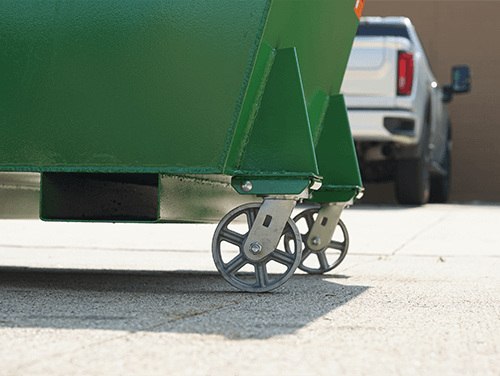
A rugged, durable hopper is built on a sturdy metal frame, and while it has features that make it compatible with a forklift, it doesn’t mean the hopper is truly mobile.
A mobile hopper is fitted with a fixed pair of casters at the front and a swivel pair at the rear. These casters are available in multiple sizes and material constructions, including phenolic, rubber, and semi-steel. The casters for the hopper are manufactured based on the expected load and the surface it will roll on.
Benefits
Mobile hoppers are ideal for dynamic environments where workflows change frequently and for any temporary setup. They can be moved out of the way to open up space for other needs, transported to other sites or locations if needed, and are fully compatible with forklifts. What’s more, as mobile hoppers are easily rotated, they can simplify lifting by turning them for easier fork entry.
Limitations
While versatile, mobile hoppers aren’t right for every application. If the hopper carries heavy loads frequently, the wheels will need occasional replacement. Additionally, moving the hopper can become inconvenient during high-volume, continuous operations.
Questions to Ask Before Purchasing a Mobile Model
- What types of casters are recommended, based on floor condition and expected load area?
- What equipment should the hopper be moved with? Can it be raised with a forklift?
- What is the maximum load?
- What types of material will you be handling?
- What dumping angle and height are needed?
- Where will the hopper be stored? Are there any clearance or space restrictions?
Stationary
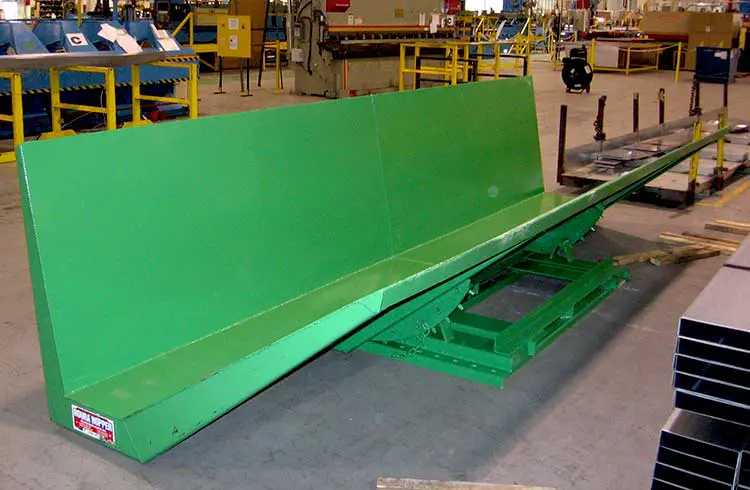
Like a mobile hopper, a stationary hopper consists of an enclosure for holding material supported by a strong metal frame, but it doesn’t feature casters and is sometimes permanently installed in a space. Stationary hoppers are typically used with processing systems and workflows that don’t change often, such as high-volume manufacturing lines. Stationary hoppers can also be emptied through side or bottom doors, or in some cases, material can be lifted out from the top. Bottom-emptying systems may deposit the material onto a conveyor for removal.
Benefits
A stationary hopper isn’t at risk of tipping over as it’s being loaded, even when very full. They aren’t subject to mechanical stresses from movement over uneven floors, and they can be built with very large storage capacity.
Limitations
Stationary hoppers require a dedicated floor area and a method for delivering material to them. If you think your setup may change, a mobile hopper might be a better choice, as permanently installed hoppers are difficult to relocate without incurring extra costs.
Questions to Ask Before Purchasing a Stationary Model
- Where will the hopper be placed?
- How much space is needed, and will that space always be available?
- How will the hopper be installed?
- How will the material be discharged? From the top? Bottom? Side?
- Is a conveyor system needed or planned?
- Does a dust collection system need to be integrated with the hopper?
- What is the largest volume of material that the hopper should hold?
- What types of material will go into the hopper?
- Will access panels or cleanout doors be needed for maintenance?
Speak With an Expert
Roura Material Handling doesn’t design off-the-shelf hoppers. We custom-engineer hoppers based on application and environmental needs. All available models can be customized with optional features such as casters, lids, and linings, and are designed to work with forklifts.
Visit our website to learn more about our products, or contact a Roura application specialist for expert advice.